Frescoed Villages
Taceno and Parlasco
A walk through the old settlements opens a window to the past: faces and trades painted along the village streets
guide you on a journey into the most authentic Valsassina alpine culture. The daily life of the village is revealed step
by step, remembering traditions and roots: rural crafts, love for nature, moments of celebration and play,
toil and dedication, stories of bandits.
Two short itineraries, easy and evocative, allow you to discover hidden corners of Valsassina, far from
the most beaten paths.
To discover the secrets, anecdotes and capture the essence of the territory, come on an excursion with the Environmental Hiking Guides of Natlink, we will take you to explore the typical corners of Valsassina!
FRESCOED VILLAGES
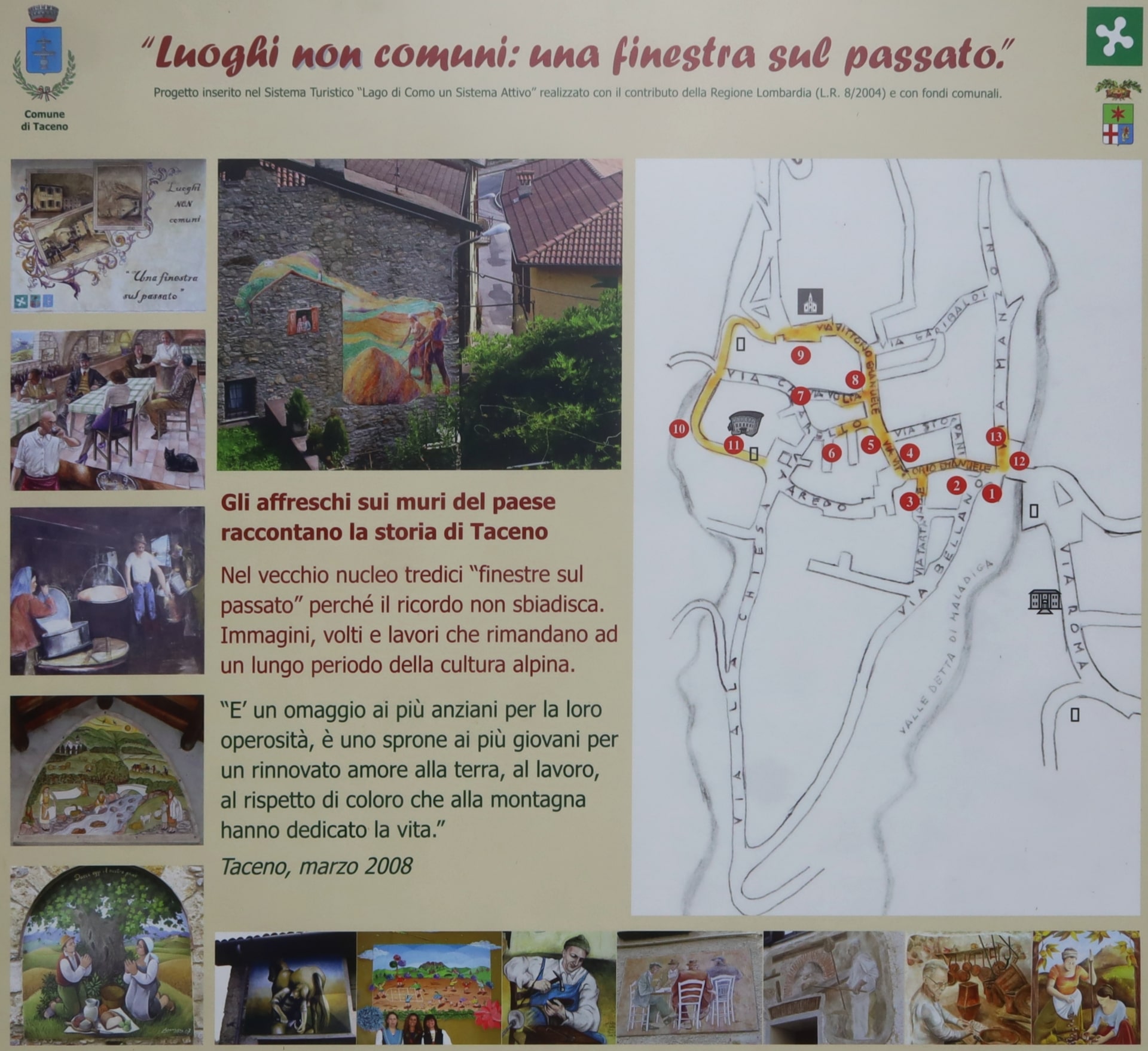
FRESCOED VILLAGE OF TACENO
Taceno is a small village at the foot of Monte Croce di Muggio and Cimone di Margno in Valsassina. Along the entire Via Vittorio Emanuele that crosses it completely, a series of artworks depicting the old trades and commercial activities of the village stand out on the walls, created with the intent to transmit roots, history and traditions to new generations, since many of these jobs have now become extinct. An even more unique aspect is that what are reproduced on the murals are truly the faces of Taceno's inhabitants, the same ones who once practiced that trade.
List of the 15 frescoes and their artists:
- A Window to the Past (Irene Colombo)
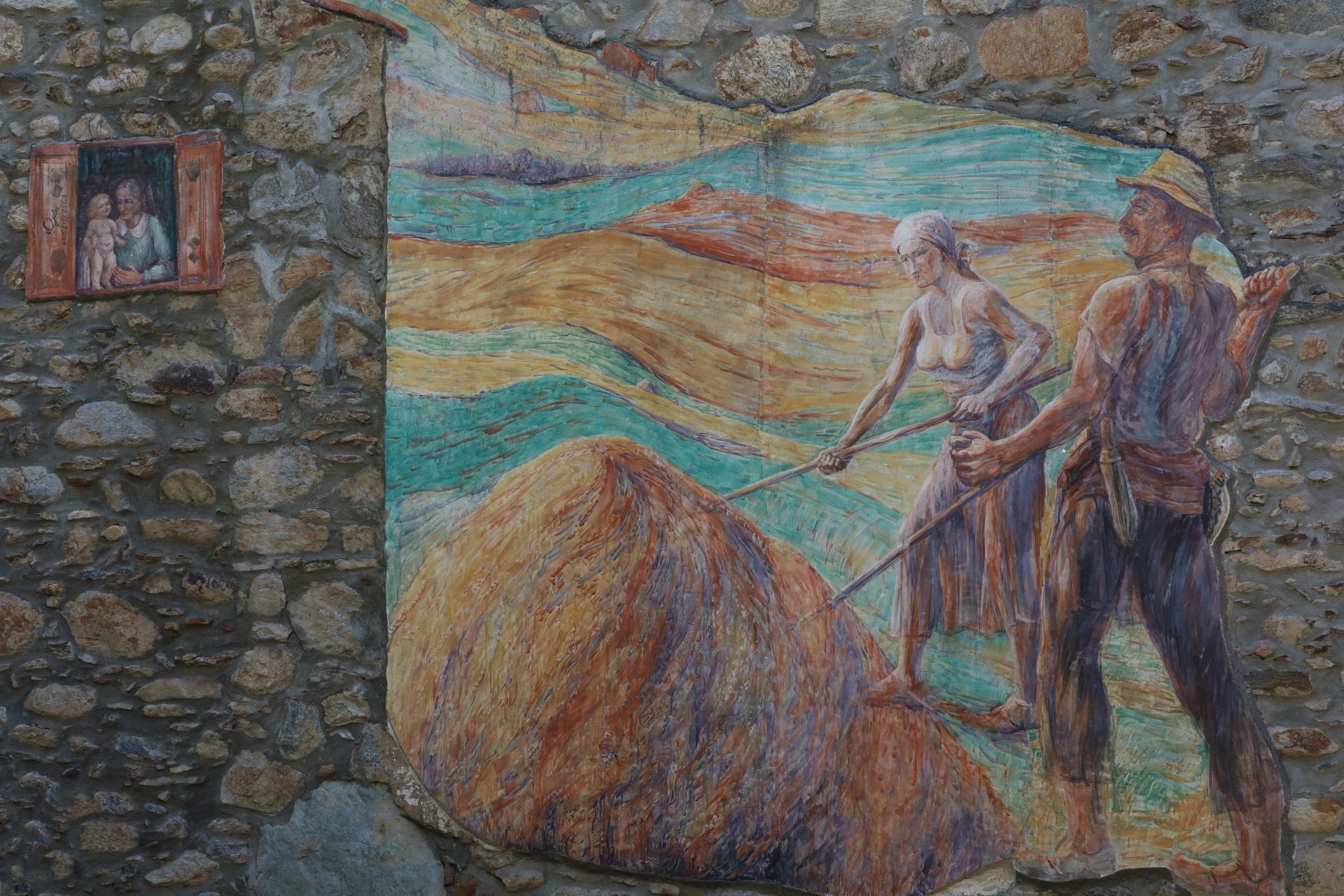
- Life in the Fields (Pavel Gutu)
- Being Together (Luigi Mantica)
- The Baker (Tiziano Lucchesi)
- The Coppersmith (Tiziano Lucchesi)
- The Cheese Maker (Donato Frisia Jr.)
- The Blacksmith (Eliana Pechenino and Erika Riehle)
- Chatting at the Tavern (Paola Magini)
- Thanksgiving (Salvatore Caramagno)
- Daily Life (Rosalba Citera)
- Emotions and games of bygone times (Franco Mora)
- Fruits and colors of our Valley (Manuela Sabatini)
- The Cobbler (Rolando De Filippis)
- The Carpenter (Irene Colombo)
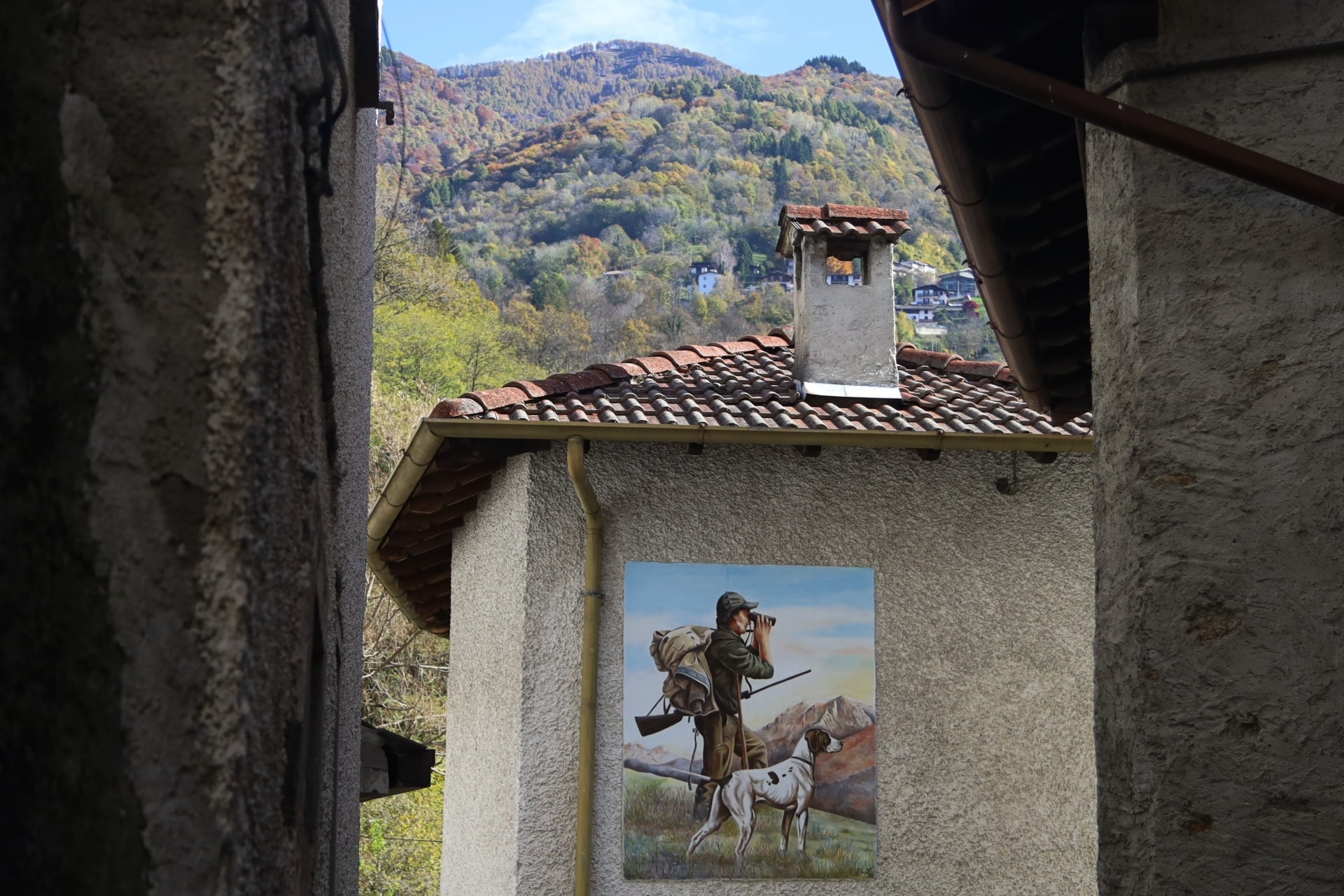
- The Hunter (Manuela Sabatini)
FRESCOED VILLAGE OF PARLASCO
From Taceno, thanks to the ancient mule track from "Bissaga", walkable on foot, you can reach Parlasco, an
ancient village of about 100 inhabitants, at almost 700 meters above sea level, immersed in the Regional Park of
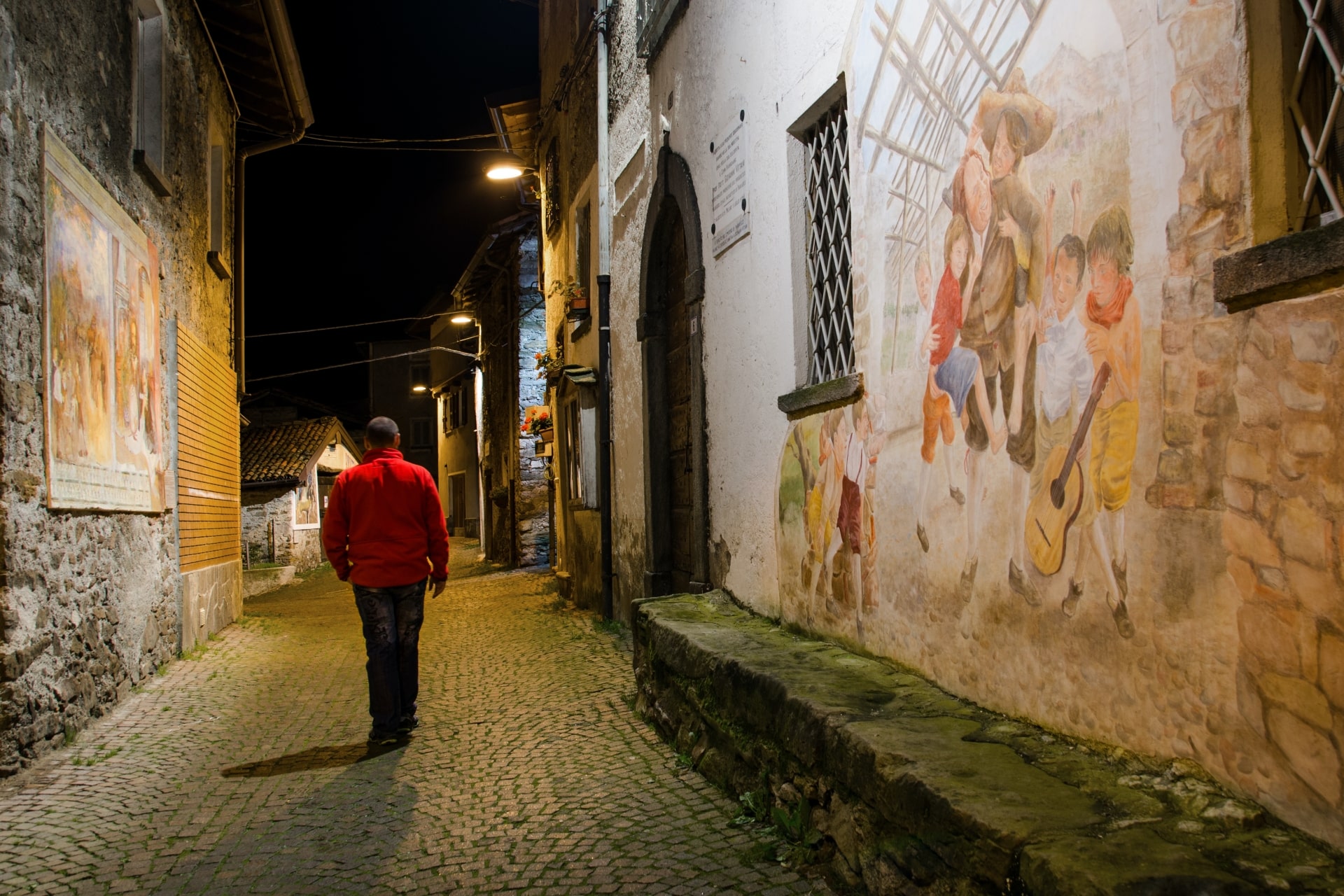
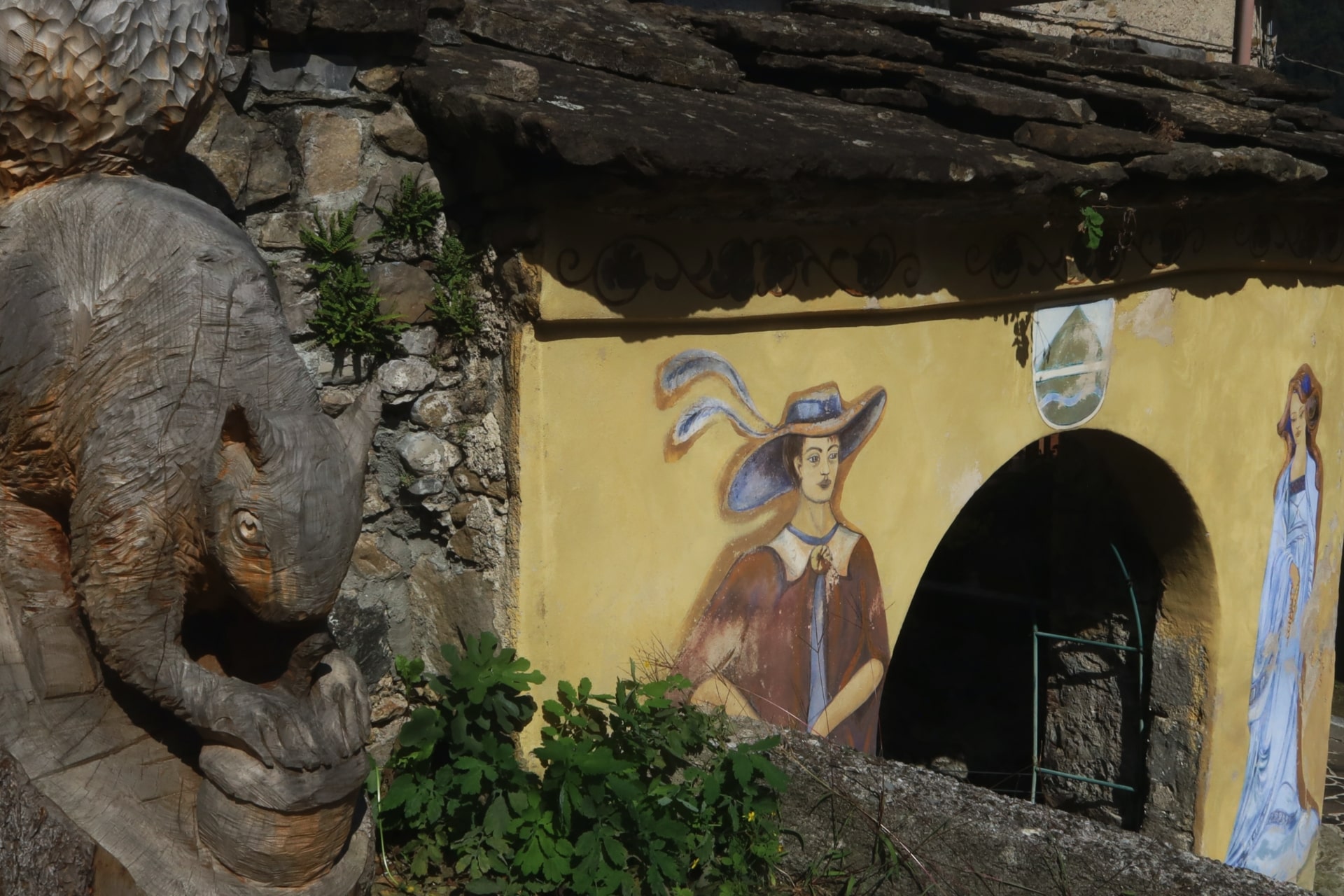
Northern Grigna. Since 2007 the ancient stone houses are guardians of splendid frescoes created by
national and international artists and painted on their walls. Born as testimony to the history and legend of the place,
these are works that contribute to keeping alive the identity of the village.
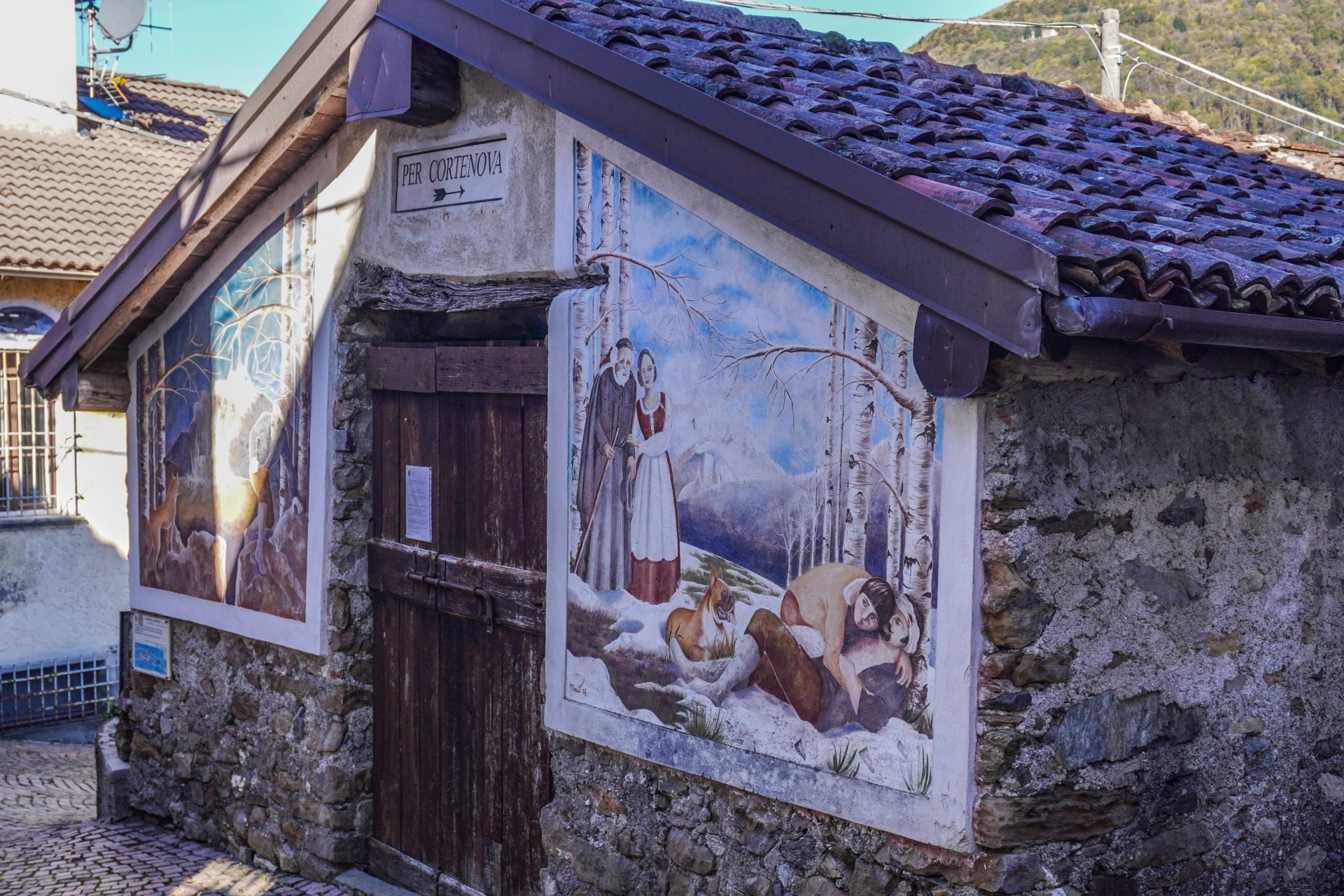
Each with its own style and technique, they tell the deeds of the legendary Lasco, namely Sigifredo Falsanti count
of Marmoro (fortress near Parlasco), by day benefactor of the most needy and by night bandit of the valley,
a character made famous by Antonio Balbiani in his historical novel "Lasco the bandit of Valsassina" dated 1871.
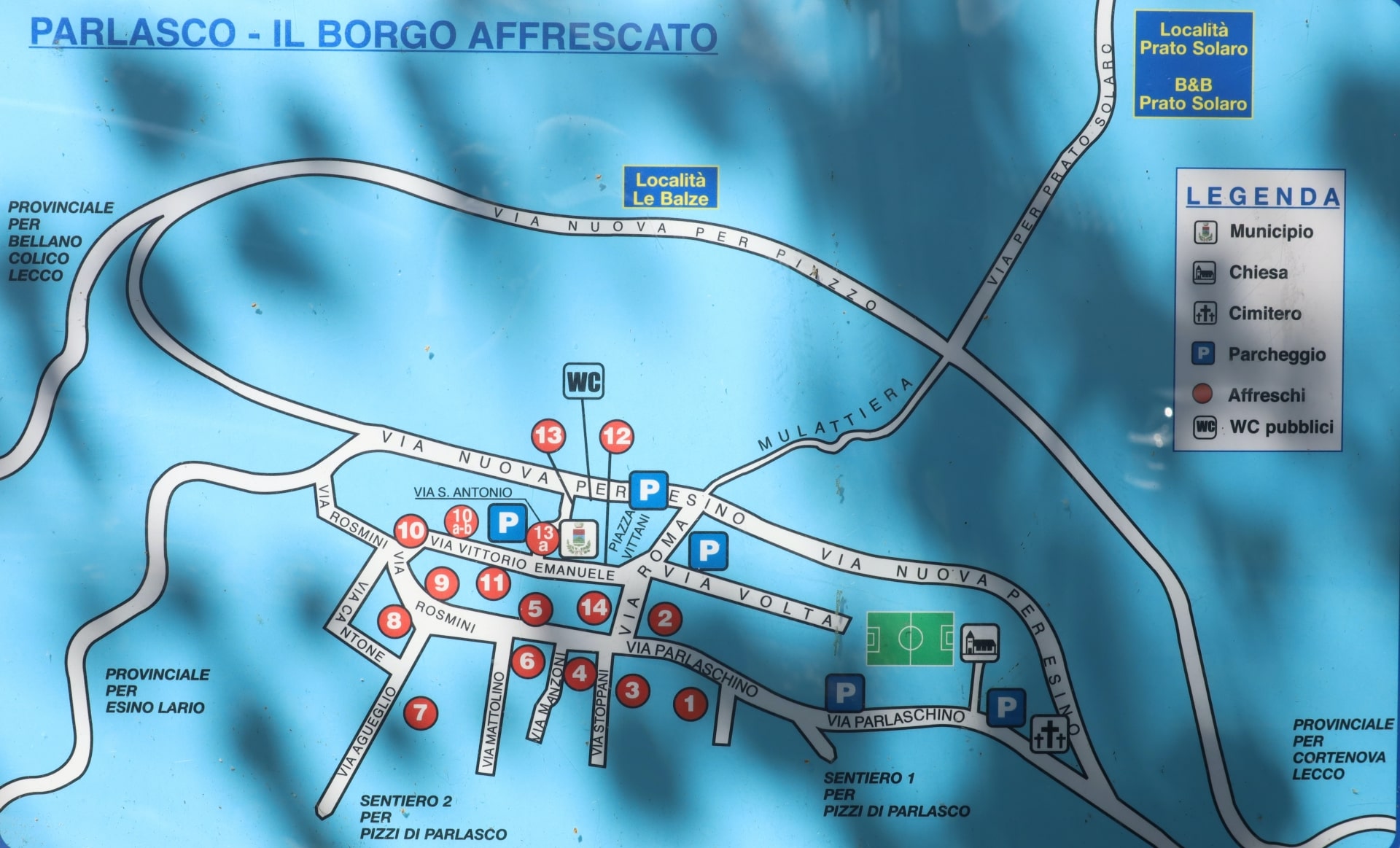
A painted village that counts 14 works depicting characters and scenography from the book: each mural is accompanied by
a plaque with the name and origin of the artist and some explanatory notes on the inspiring events.
Gallery